WHAT IS HEALTH ANXIETY?
Health anxiety, also known as hypochondriasis, is when worries about your health start to take over. You may fear that you have, or might develop, a serious illness even when doctors say you are healthy or symptoms are mild or unclear. Everyday body sensations, like a headache, stomach discomfort, or a racing heart, can feel alarming and may be interpreted as signs that something is seriously wrong.
To cope with this fear, people with health anxiety often check their bodies, search symptoms online, repeatedly ask doctors or loved ones for reassurance, or sometimes avoid medical appointments out of fear. Although reassurance or normal test results may help for a short time, the anxiety often comes back, leaving you feeling stuck in a cycle of worry.
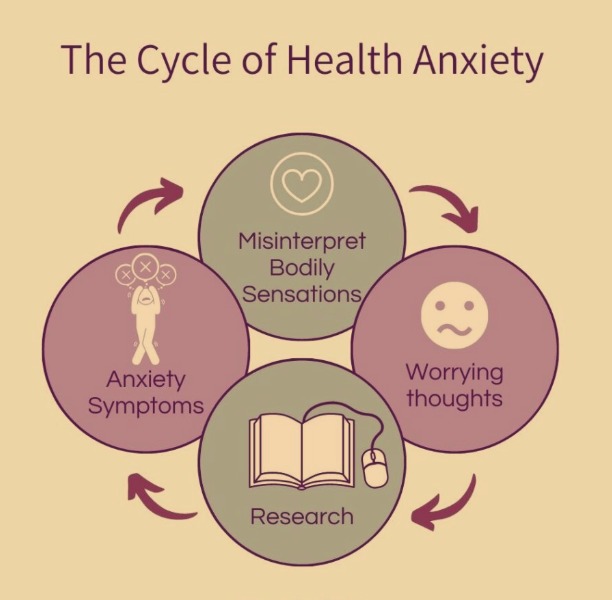
EXAMPLES OF TRIGGERS & BEHAVIORS:
You notice a mild headache and find yourself spending hours searching online, worried it could be something serious.
You see a new spot or mole on your skin and feel a rush of panic about cancer, even after a doctor reassures you.
You feel a small flutter or discomfort in your stomach and start avoiding food or social plans because it feels unsafe.
** These experiences are common in health anxiety and can be very distressing, even though the sensations themselves are not dangerous. **
COGNITIVE BEHAVIORAL THERAPY:
Cognitive behavior therapy helps you learn how to notice, challenge, and change unhelpful thoughts and habits related to your health. This includes learning to look at body sensations in a more balanced, realistic way and reducing behaviors like constant body checking or monitoring symptoms, so health worries feel more manageable over time.
TREATMENT FOR HEALTH ANXIETY
Medication:
Antidepressants, SSRIs or NSRIs, can be effective, especially if anxiety is severe or other treatments aren't enough. Medication is often used in conjunction with therapy.
Exposure Therapy:
Exposure therapy helps you gradually face health fears instead of avoiding them or trying to feel reassured right away. You practice noticing feared sensations or situations, like a small ache or unusual feeling, without doing things that usually make anxiety worse, such as Googling symptoms or repeatedly checking your body.
In therapy, this may include imagining your worst health fears and learning to sit with the uncertainty. Your therapist may also safely help you create physical sensations that you often worry about so you can see that you can tolerate them. Over time, by not engaging in checking or reassurance-seeking, your brain learns that these sensations are uncomfortable but not dangerous, and the anxiety begins to lose its power.