

WHAT IS SOCIAL ANXIETY?
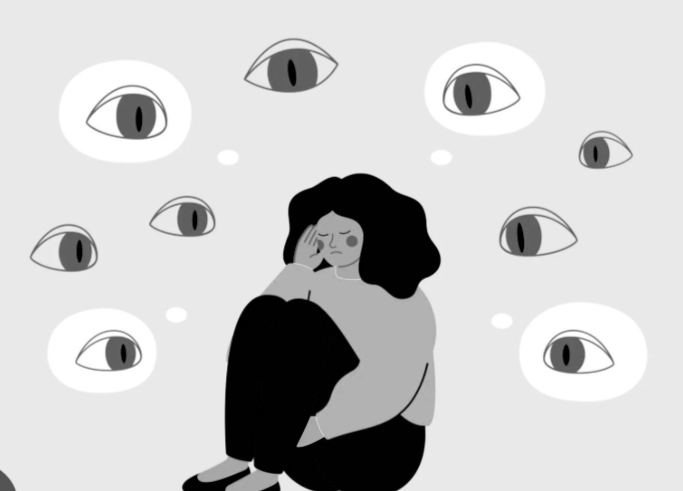
A strong fear of being watched or judged by others, even during everyday activities like meeting new people, eating in public, or using a public restroom. The fear feels much bigger than the situation itself and lasts for at least six months.
Feeling extremely aware of how you look, sound, or behave, with ongoing worries that you might say or do something embarrassing.
Avoiding social situations such as parties, gatherings, or even short conversations because they feel overwhelming or anxiety-provoking.
Anxiety showing up in the body through symptoms like blushing, shaking, sweating, a fast heartbeat, shortness of breath, stomach discomfort, or a dry mouth.
Spending days or weeks worrying about upcoming social situations, feeling your mind go blank when anxious, or having a strong fear of rejection or negative judgment.
COGNITIVE BEHAVIOR THERAPY:
Considered the gold standard, CBT helps you Identify and challenge distorted thoughts about social situations, learn relaxation and coping skills. You will also practice social skills through role-playing with your therapist.
Exposure Therapy:
A CBT component where you slowly and safely confront feared social situations (e.g., starting conversations, attending events, creating scripts of your feared social scenario happening) to reduce your anxiety response over time.
TYPES OF SOCIAL ANXIETY
Specific Social Phobia - This is when you experience significant anxiety in specific situations like public speaking.
General Social Phobia - This is when you experience significant anxiety in most social situations (meeting new people, ordering food at a restaurant, talking to a cashier in a store, etc.).
TREATMENT FOR SOCIAL ANXIETY
MEDICATION:
Antidepressants: Often the first choice, including:
SSRIs (Selective Serotonin Reuptake Inhibitors)
SNRIs (Serotonin-Norepinephrine Reuptake Inhibitors)
Beta-Blockers: Can help manage physical symptoms like trembling or rapid heart rate.
ACCEPTANCE & COMMITMENT THERAPY:
Acceptance and Commitment Therapy (ACT) is an effective treatment for social anxiety. Instead of trying to get rid of anxiety, ACT helps you learn how to make room for anxious feelings without fighting them or letting them control your life.
ACT focuses on helping you move toward what truly matters to you, such as relationships, work, or personal growth, even when anxiety shows up. Rather than avoiding social situations, you practice showing up in meaningful ways while allowing fear, shame, or self-critical thoughts to be present in the background.
Through ACT, you learn skills to become more aware of the present moment, reduce avoidance, and change how you relate to anxious thoughts and feelings. Over time, this creates greater flexibility, allowing you to live a fuller, more connected life, even if anxiety doesn’t completely disappear.